
Planning for the Future of Harlequin Toads: Three Workshops Shaping Conservation Across the Neotropics

In 2021, the Atelopus Survival Initiative (ASI) published the Harlequin Toad (Atelopus) Conservation Action Plan, known as the HarleCAP, a landmark document co-developed by more than 35 ASI members. The HarleCAP provides the first coordinated roadmap for protecting one of the most threatened groups of amphibians on Earth.
It outlines the most urgent conservation priorities for harlequin toads across their entire range and sets out what needs to happen at the local, national, regional, and international levels over the next twenty years. Its vision is simple but profound: that harlequin toads, flagship amphibians and jewels of the Neotropics, are conserved through collaboration, knowledge generation, threat mitigation, and recognition of their cultural and biological importance.

Now, almost five years later, the ASI has evaluated how far the Atelopus community has progressed in turning this vision into reality. The results are encouraging. All 5 HarleCAP goals and all 19 objectives have already begun to be implemented, and around 80% of its 62 actions and 112 activities are already underway or finished, a remarkable sign of collective commitment.
Yet successful conservation planning does not end with a regional roadmap. To be effective, plans must be adapted to local realities, co-created with the communities that live alongside these species and, most importantly, backed with political will, funding, and long-term support.
Without these elements, conservation plans remain only documents. With them, they become living tools for change.
With this in mind, in 2025, the ASI helped organize three in-person workshops in Ecuador, Brazil, and Colombia to build HarleCAP-inspired, locally grounded strategies for the long-term survival of harlequin toads.
Angamarca, Ecuador: A Plan Rooted in Community
The first workshop, co-organized by ASI member Alianza Jambato, took place on April 24, 2025, in Angamarca, in the high Andes of central Ecuador, home to the legendary Jambato Harlequin Toad (Atelopus ignescens).
Once abundant and culturally important, A. ignescens suffered dramatic declines beginning in the late 20th century. For nearly three decades it was feared extinct until its remarkable rediscovery in 2016. Today, surviving populations remain extremely small and fragile, making conservation planning urgent. Current threats include habitat loss, agricultural expansion, pesticide use, infectious diseases and climate change.
More than forty people gathered for a full day of collaborative planning. Local leaders, farmers, teachers, community members, conservationists, researchers, provincial authorities, and national and international experts all sat together, shaping the future of the Jambato. Their strong participation ensured that the resulting plan reflects local needs, values, and realities rather than being imposed from the outside.

The workshop built upon a preliminary draft prepared by ASI members Alianza Jambato, Centro Jambatu, and Fundación Jocotoco. By the end of the day, participants consolidated a conservation plan around five central goals: generating more scientific knowledge; restoring habitats and reducing threats; strengthening wild populations through coordinated in situ and ex situ actions; expanding education, communication, and community leadership; and ensuring adaptive management and long-term financial sustainability. The plan proposes 13 objectives and 49 concrete activities that will soon be formally published.
Manaus, Brazil: Protecting a Species Found Nowhere Else
Four months later, on August 25, 2025, the focus shifted deep into the Amazon. During the Brazilian Congress of Herpetology in Manaus, more than eighty people attended a workshop dedicated to conserving the Manauensis Harlequin Toad (Atelopus manauensis), a species found only in the forests surrounding the city.
Despite its precarious situation and its classification as Endangered by the IUCN, the species is still not included in any official conservation plans in Brazil. Its habitat continues to shrink rapidly because of urban expansion, mining, road construction, agriculture, pollution, and other pressures. Local partners therefore requested ASI support to initiate a participatory process similar to the HarleCAP but tailored for Manaus.
Before the workshop, schoolchildren participated in creative activities, including a photography exhibition led by the Documenting Threatened Species (DoTS) project, helping integrate the species into local cultural life.

During the workshop, around thirty invited stakeholders, including researchers, conservation practitioners, protected area managers, museum staff, government agencies, and NGOs, worked together using the methodology of the Brazilian Ministry of Environment and Climate Change for threatened species action plans.
They identified the main threats facing A. manauensis and proposed more than 25 actions to address them. Priorities included protecting remaining forest fragments, preventing pollution, evaluating impacts of introduced fishes, improving environmental legislation, mitigating development impacts, and monitoring the potential spread of the chytrid fungus.
The workshop also highlighted the need for genomic research, ex situ breeding protocols, and long-term monitoring, areas already being advanced by Brazilian academic institutions and the São Paulo Zoo through a sister-species program.
Together, participants began shaping a structured plan that will guide future fundraising and implementation.
Cali, Colombia: A National Effort for 41 Species
The third workshop took place on October 25, 2025, during the IUCN Conservation Planning Specialist Group (CPSG) global meeting in Cali. Colombia is the global epicenter of Atelopus diversity, home to 41 species, many critically endangered, possibly extinct, or known only from historical records.
Co-organized by Amphibian Ark, CPSG, and the ASI, the workshop brought together more than thirty experts from twenty institutions. For the first time in CPSG history, the entire working session was held in Spanish, marking an important step toward inclusive conservation planning.
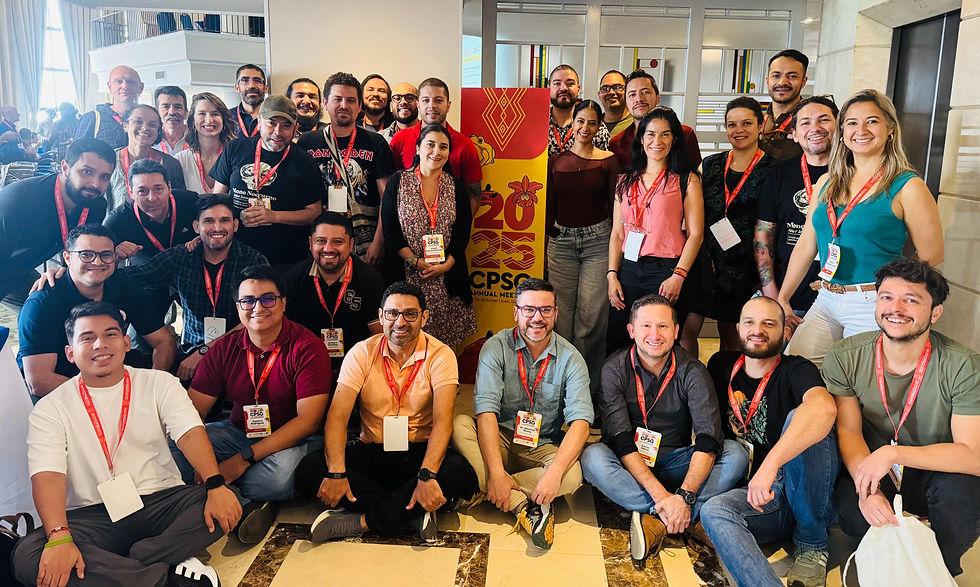
Participants reviewed all goals and objectives of the HarleCAP and adapted them to Colombia’s realities. They analyzed urgent priorities, persistent knowledge gaps, and how threats such as disease, climate change, illegal collection, and habitat loss interact across regions.
They then designed four national implementation projects focused on rediscovering lost species, identifying and mitigating threats, strengthening ex situ programs, and building a robust national database and Atelopus conservation network.
A volunteer drafting team committed to preparing the first version of the national plan by early 2026. Reviving ReCRAC, Colombia’s national harlequin toad conservation network, and securing long-term funding and government engagement were also prioritized.
Turning Plans into Action
Across Ecuador, Brazil, and Colombia, these three workshops demonstrate a simple but powerful truth: conservation plans are only meaningful when built with the people who will bring them to life.
The ASI’s commitment to local co-creation mirrors the spirit of the HarleCAP itself. It reinforces that protecting harlequin toads is not only a scientific challenge, it is a cultural, social, and political journey rooted in shared responsibility.
Progress over the last five years proves that collaborative coordinated action works. But sustaining this momentum will require continued investment, stronger partnerships, and long-term political will.
Harlequin toads are among the most threatened amphibians on the planet, but they are also powerful symbols of resilience. With each workshop, each community gathering, and each new conservation plan, their future grows a little brighter.
These workshops were made possible through support from the ASI, the IUCN SSC Conservation Planning Specialist Group, the IUCN SSC Amphibian Specialist Group, and the Brazilian Ministry of Environment and Climate Change, and through funding from On the Edge, Stiftung Artenschutz, Amphibian Ark, Re:wild, and Milkywire.


Inspiring and vital work! It’s amazing to see collaborative workshops shaping real conservation plans for harlequin toads, blending science, local engagement, and community voices to protect these remarkable amphibians. Truly a step forward for biodiversity and hope! Luiz Antonio Duarte Ferreira
Amazing work! Your post highlights the power of collaboration, community engagement, and strategic planning for harlequin toad conservation. It’s inspiring to see workshops shaping real, locally rooted actions for these incredible amphibians’ future. Thank you for sharing! Luiz Gustavo Mori
Absolutely inspiring work! 🌿👏 Your workshop series shows how local voices and global collaboration can truly shape effective conservation plans for harlequin toads — vital jewels of the Neotropics. It’s uplifting to see science, community, and passion come together for such a critical cause! Daniel Dantas